
Blogs/Pachanga editorial
Chlorine vs. Saltwater Pools: Which Is Best for Your Texas Hill Country Home?
By Pachanga Pools · July 2026
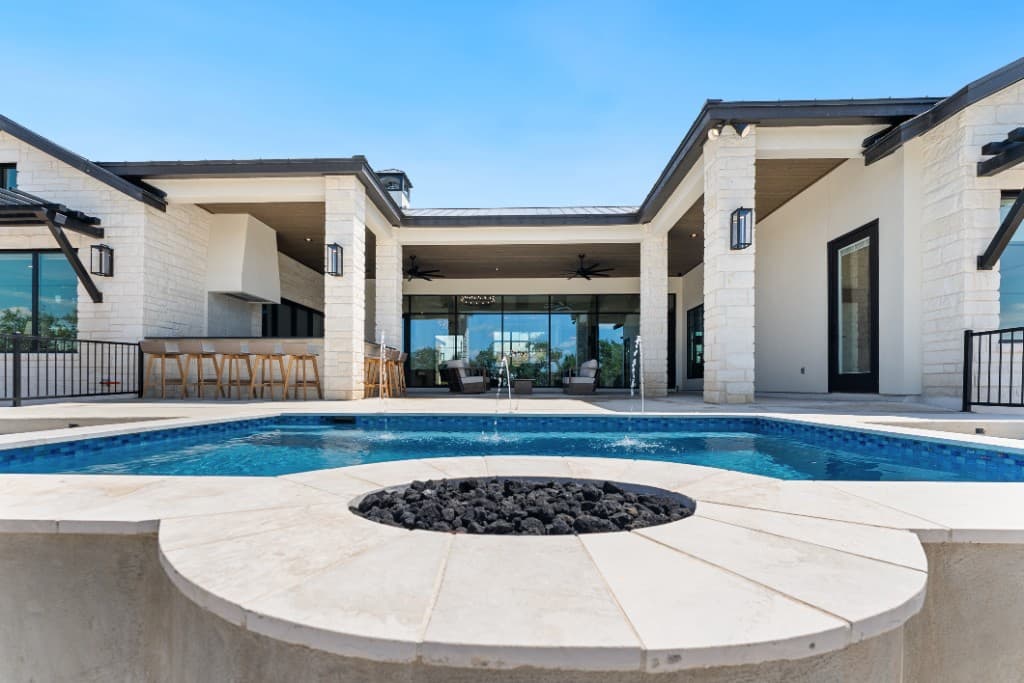
If you're planning a new pool in the Texas Hill Country, one of the first decisions you'll make is how you want your pool water sanitized.
Two of the most common options are traditional chlorine systems and saltwater chlorine systems. Both can keep a pool clean, clear, and comfortable when properly designed and maintained. The right chlorine vs saltwater pool choice in the Texas Hill Country comes down to your home's environment, your preferred maintenance routine, your pool equipment, and the water conditions in your area.
At Pachanga Pools, we typically recommend a traditional chlorine system for our Texas Hill Country pools. Here's why—and what you should know before making your decision.
What Is the Difference Between Chlorine and Saltwater?
First, let's clear up a common misconception: saltwater pools still use chlorine.
A saltwater pool has a salt chlorine generator that uses electrolysis to convert dissolved salt into chlorine. That chlorine is then used to sanitize the pool water. After the sanitizing process, the chlorine eventually converts back into salt, allowing the cycle to continue.
A traditional chlorine pool, on the other hand, receives chlorine directly through products added to the pool water.
So the saltwater vs chlorine pool question isn't really "chlorine versus no chlorine."
It's how the chlorine is produced and managed.
The Pros of a Saltwater Pool
Saltwater systems have become increasingly popular, and there are some legitimate reasons homeowners choose them.
Less Direct Chlorine Handling
One of the biggest advantages is convenience. A salt chlorine generator produces chlorine automatically, which means homeowners don't have to add chlorine manually as frequently.
For someone who wants a more automated approach to pool sanitation, this can be appealing.
Softer-Feeling Water
Many homeowners describe saltwater pools as having a softer, more comfortable feel.
The salt concentration in a saltwater pool is much lower than seawater, but some swimmers prefer the overall experience.
Automated Chlorine Production
A salt chlorine generator can continuously produce chlorine based on the system's settings and operating schedule. Modern systems can also integrate with pool automation, making it easier to monitor and manage the pool.
The Cons of a Saltwater Pool
Saltwater systems aren't maintenance-free, and there are a few considerations that are particularly important for a saltwater pool in the Texas Hill Country.
Higher Upfront Equipment Cost
A saltwater pool requires a salt chlorine generator and salt cell in addition to the pool's other equipment.
That means a higher initial equipment investment compared with a traditional chlorine system.
The Salt Cell Requires Maintenance
The salt cell is one of the key components of the system and eventually needs to be cleaned and replaced.
Its lifespan depends on factors including water chemistry, operating conditions, and maintenance.
Hard Water Can Create Scale
This is one of the biggest considerations we look at in the Texas Hill Country.
The Texas Hill Country's limestone geology contributes to naturally hard water. Groundwater from limestone aquifers is typically hard because slightly acidic water dissolves calcium and magnesium from the rock. The Texas Water Development Board found that groundwater analyzed in the Hill Country of Central Texas is inherently hard to very hard.
Hard water means higher levels of minerals such as calcium and magnesium. When pool water evaporates—something that happens frequently during hot Texas summers—the minerals remain behind and become more concentrated.
That can contribute to calcium scale on pool surfaces and equipment.
Salt chlorine generators are particularly important to monitor because calcium scale can accumulate on the cell. Manufacturers note that water hardness can affect scale buildup.
This doesn't mean a saltwater pool can't work in the Hill Country. It absolutely can.
It simply means water chemistry and maintenance become especially important.
Salt Can Increase Corrosion Concerns
Saltwater systems introduce dissolved salt into the pool environment. Salt can increase corrosion concerns for certain metals and equipment if the system isn't properly designed and maintained.
That's particularly worth considering when a pool includes premium outdoor kitchens, metal features, natural stone, water features, and other high-end materials.
The Pros of a Traditional Chlorine Pool
For many of our customers, traditional chlorine provides a straightforward approach to pool sanitation.
Lower Initial Equipment Cost
Traditional chlorine systems generally don't require a salt chlorine generator or salt cell, which can reduce the initial equipment investment.
Straightforward Water Chemistry
With a traditional chlorine system, chlorine can be tested and adjusted directly.
That gives your pool service professional greater direct control over the sanitizer level and overall water chemistry.
No Salt Cell to Maintain
Traditional chlorine systems don't have a salt cell that needs to be cleaned or eventually replaced.
That's one less specialized component to monitor over the life of the pool.
Fewer Salt-Related Concerns
Because you're not intentionally adding salt to the pool water, you avoid the additional corrosion considerations associated with a saltwater system.
For homeowners investing in premium materials throughout their outdoor living space, this can be an important consideration.
Why Pachanga Pools Typically Recommends Chlorine
At Pachanga Pools, we don't believe there is one pool system that's perfect for every homeowner.
We look at the whole pool environment.
For Texas Hill Country pools, traditional chlorine is often our recommendation because it provides a straightforward, reliable system while avoiding the additional equipment and salt-related considerations that come with a salt chlorine generator.
We also know that Texas pool ownership comes with its own unique considerations.
Texas Heat
Hot temperatures mean more evaporation, more water being added to the pool, and more opportunities for minerals to become concentrated.
Hard Water
The limestone geology of the Hill Country contributes to hard water conditions, which can increase the potential for calcium scale.
Premium Pool Materials
Many of the pools we build incorporate natural stone, tile, water features, outdoor kitchens, metal finishes, and other carefully selected materials.
We want the entire system—from the pumps and filtration to the sanitation system and finishes—to work together for the long term.
Simplicity
A traditional chlorine system gives homeowners and pool professionals a straightforward way to monitor and adjust the pool's sanitizer level without relying on a salt cell.
For us, it's about choosing equipment that makes sense for the environment and the way our customers want to enjoy their pools.
Is a Saltwater Pool Bad for Texas?
No.
A properly designed and maintained saltwater pool can work very well in the Texas Hill Country.
The important thing is understanding what comes with the system.
Saltwater pools still require regular water testing and maintenance. In fact, Taylor Technologies notes that pH, alkalinity, calcium hardness, and other water-balance factors still need to be monitored in pools using salt chlorine generators.
A saltwater system isn't a maintenance-free pool.
It's simply a different method of producing chlorine.
Which Pool System Should You Choose?
The best pool system for Texas depends on your property, your water, and your priorities.
A saltwater system may be appealing if you:
- Prefer automated chlorine generation
- Want to reduce the frequency of manually adding chlorine
- Prefer the feel of saltwater
- Are comfortable maintaining a salt chlorine generator
- Understand the additional equipment and long-term considerations
A traditional chlorine system may be appealing if you:
- Want a straightforward sanitation system
- Prefer lower initial equipment costs
- Want direct control over chlorine levels
- Want to avoid maintaining a salt cell
- Are building a pool with premium stone, metal, and outdoor living materials
For many of our Texas Hill Country customers, traditional chlorine is the system we recommend.
Building a Pool in the Texas Hill Country?
Your pool is more than a hole filled with water. It's an extension of your home and your outdoor living space.
At Pachanga Pools, we consider the entire environment when designing and building a pool—from the shape and finishes to the equipment, water features, landscaping, and way you'll actually use the space.
If you're considering a new chlorine pool in New Braunfels, Canyon Lake, Boerne, Bulverde, Spring Branch, or throughout the Texas Hill Country, we'd be happy to help you determine which pool system makes the most sense for your property and lifestyle.
Let's build a pool that's designed for the way you live—and built for the Texas Hill Country.
Ready to plan a Hill Country pool?
Tell us about your backyard and we'll help you choose the sanitation system that fits the property.
Sources & Further Reading
- Texas Water Development Board (TWDB) — Texas Well Owner Network: Well Owner’s Guide to Water Supply
Explains how limestone aquifers typically produce hard groundwater as calcium and magnesium dissolve from the rock.
- Texas Water Development Board — Evaluation of the Ground-Water Resources of the Paleozoic and Cretaceous Aquifers in the Hill Country of Central Texas
Finds that groundwater analyzed in this Hill Country study is inherently hard to very hard.
- Pentair — Pool Water Chemistry Guide
Covers calcium hardness, scaling, corrosion, chlorine, and general pool-water chemistry.
- Pentair — IntelliChlor Salt Chlorine Generator
Describes electrolysis that converts dissolved salt into chlorine and notes calcium and scale considerations at the cell.
- Taylor Technologies — Salt Chlorine Generators
Notes that pH, total alkalinity, calcium hardness, and other water-balance factors still need monitoring with a salt chlorine generator.
- Taylor Technologies — Water Testing Technical FAQs
Lists commonly accepted pool-water chemistry parameters, with the PHTA guidance last reviewed by Taylor on August 12, 2026.