
Blogs/Pachanga editorial
How Texas Soil Conditions Can Affect Pool Construction
By Pachanga Pools · October 2026
Understanding the Ground Beneath Your Backyard
Building a swimming pool in the Texas Hill Country comes with unique opportunities and challenges. From rolling hills and rocky terrain to expansive clay soils and shallow limestone, the ground beneath your backyard plays an important role in how a pool is designed, excavated, and constructed.
At Pachanga Pools, we understand that every property is different. Before the first shovel breaks ground, understanding the site's conditions can help homeowners plan for a smoother construction process and a pool built for long-term performance.
If you're considering a custom swimming pool in New Braunfels, Canyon Lake, Bulverde, Spring Branch, or the surrounding Texas Hill Country, here's what you should know about local soil conditions and how they can affect your project.
1. Limestone and Rocky Terrain
One of the most recognizable features of the Texas Hill Country is its limestone-rich geology. In many areas, bedrock sits relatively close to the surface, which can make pool excavation more complicated than digging through ordinary soil.
When excavation encounters solid limestone or extensive rock, specialized equipment and additional labor may be necessary to reach the planned pool depth and shape.
Rocky conditions can affect several aspects of construction:
- Excavation methods: Hard rock may require specialized machinery or rock-breaking equipment.
- Construction schedules: Difficult excavation can add time to the project.
- Project costs: Additional equipment, labor, and rock removal can affect the overall budget.
- Pool design: The depth and location of bedrock may influence the most practical layout for a property.
Not every Hill Country property has the same rock conditions. Two neighboring lots can have very different excavation requirements, which is why evaluating the actual building site is so important.
2. Expansive Clay Soils
While some properties are dominated by rock, others contain clay-rich soils that expand when they absorb moisture and shrink as they dry.
This movement is especially important in Central Texas, where prolonged dry periods can be followed by heavy rainfall. Changes in soil moisture can cause the ground to move, potentially affecting pool structures, surrounding decking, patios, and other improvements.
Proper planning considers how the soil may respond to changing moisture conditions over time.
Depending on the site, considerations may include:
- Evaluating soil conditions before construction.
- Designing the pool structure for the conditions identified by qualified professionals.
- Planning drainage to direct water away from the pool and surrounding structures.
- Managing irrigation and landscaping so moisture levels do not fluctuate unnecessarily around the pool.
- Constructing surrounding decks and hardscapes with appropriate movement joints and support.
The right approach depends on the property's soil characteristics and the pool's structural design. There is no single solution that works for every lot.
3. Sloped Lots and Uneven Terrain
The rolling landscape of the Texas Hill Country is beautiful, but a sloped backyard can require additional planning when installing a swimming pool.
A property with a significant elevation change may need grading, retaining structures, engineered drainage, or a carefully designed relationship between the pool, patio, and house.
These conditions can influence both the appearance and functionality of the finished outdoor space.
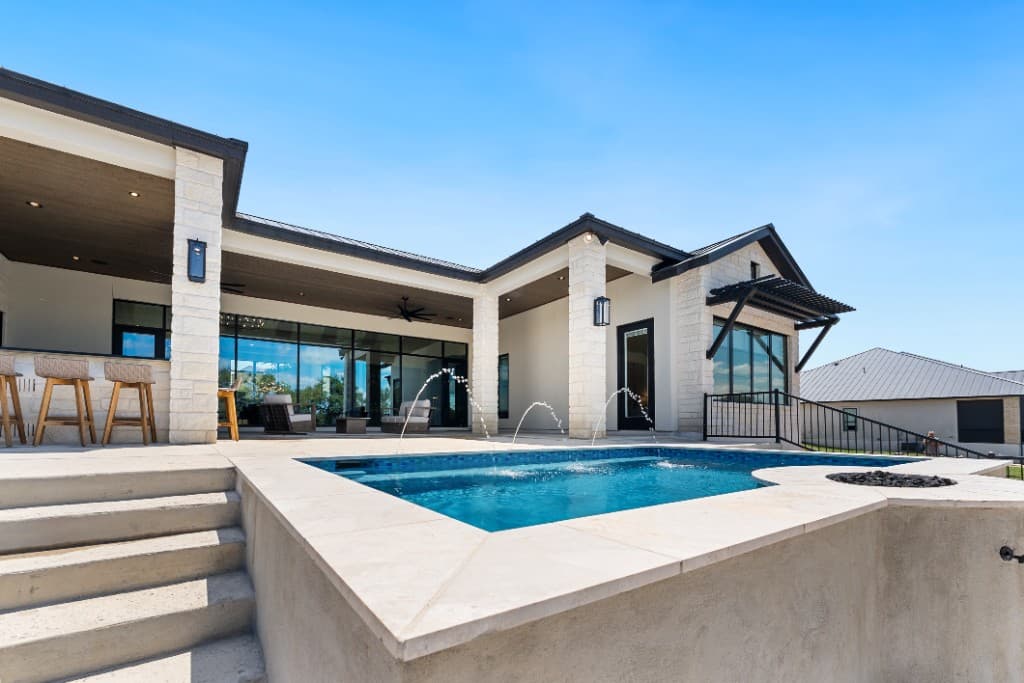
For example, a well-planned pool on a sloped property may incorporate elevated decking, multiple outdoor living areas, or retaining walls that complement the home's architecture.
Before construction begins, the site should be evaluated for:
- Existing elevations and changes in grade.
- Surface-water drainage patterns.
- Soil stability and retaining-wall requirements.
- Access for excavation equipment and construction materials.
- The relationship between the pool, home foundation, fences, and neighboring properties.
Working with the natural contours of the property can create a beautiful result while helping address practical construction considerations.
4. Drainage and Heavy Texas Rainfall
Texas weather can change quickly. Periods of drought, intense summer storms, and heavy rainfall can all affect the ground surrounding a swimming pool.
Without appropriate drainage, water can collect around the pool, wash away soil, contribute to erosion, or place additional pressure on surrounding structures.
Good drainage planning should be considered early in the design process rather than treated as an afterthought.
Depending on the property, a drainage plan may include surface grading, drainage channels, suitable stormwater outlets, or other engineered solutions. The goal is to manage water so it flows appropriately through the site rather than accumulating in areas where it could cause problems.
Homeowners should also consider how roof runoff, irrigation systems, and water from adjacent parts of the yard will interact with the pool area.
5. How Soil Conditions Can Affect Your Pool Budget
One of the most important things to understand about building a pool in the Texas Hill Country is that the property itself can influence the final project cost.
A relatively straightforward excavation may require fewer resources than a site with extensive limestone, difficult equipment access, substantial elevation changes, or specialized drainage needs.
Potential cost considerations include:
- Rock excavation and removal.
- Additional site preparation or grading.
- Soil evaluation and engineering.
- Retaining walls or slope stabilization.
- Drainage improvements.
- Adjustments to the pool's placement or design.
These expenses are site-specific. A professional evaluation can help identify potential challenges early and establish more realistic expectations before construction begins.
6. Why Proper Site Evaluation Matters
Pool construction involves much more than choosing a shape, tile, and waterline finish. Understanding the property beneath and around the pool is an essential part of creating a lasting outdoor space.
Depending on the site, preparation may involve reviewing topography, examining visible soil and rock conditions, checking drainage patterns, and consulting geotechnical or structural professionals when warranted.
This information can help guide decisions about pool placement, excavation methods, structural design, and the surrounding landscape.
For homeowners, addressing these considerations early can help reduce surprises and support better-informed decisions throughout the building process.
Planning a Pool in the Texas Hill Country?
Every backyard brings its own possibilities. Whether your property features rocky terrain, rolling hills, clay-rich soil, or a combination of conditions, thoughtful planning is the first step toward a pool that complements your home and landscape.
At Pachanga Pools, we believe a successful project begins with understanding the property, the homeowner's vision, and the practical details that bring the two together.
Thinking about building a custom pool? Contact Pachanga Pools to discuss your property, explore your options, and begin planning an outdoor space designed around your home and lifestyle.
Ready to plan a Hill Country pool?
Tell us about your backyard and we'll help you choose materials and equipment that fit the property.